Low Carb Meal With Roast Beef
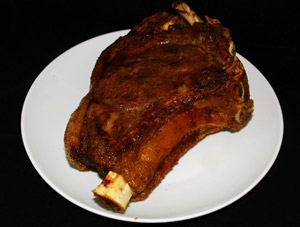 Rare roast beefiness is past far my favourite food. It is one of the highlights of my low-carb diet. I love eating it, whether hot or cold. I always roast a huge chunk, and so that there are leftovers to keep in the refrigerator for eating common cold.
Over the years, I think I mastered the art of roasting beef (even though I do say so myself). I go compliments on my roast beef from people far less cannibal than myself. So I thought I'd share my method with you lot. There are only a few basic rules – they are all very simple just vital for the result.
ane. Get expert quality meat from a butcher
This ane is a bit of a no-brainer, but information technology is very important. It is well worth spending extra to become an organic and preferably grass-fed clamper of beef. Ideally, with a bone still in. And with a solid thick layer of fat on top.
The deviation from those pitiful anaemic cuts in plastic packs you lot arrive supermarkets will be enormous! (Sometimes those poor things come with a pathetic thin layer of fat tied on top with a cord – what's that all about?)
ii. Choose a cut that is perfect for roasting
The all-time articulation for roasting is rib of beef. In that location should be plenty of fat on height of your cut, and preferably throughout also. Even if you lot don't like to eat the fat (which I discover very strange only each to his own), it volition greatly amend the sense of taste and texture of the meat, making it juicy and rich.
three. Accept the joint out of the fridge well in accelerate
Beefiness must be around room temperature before yous stick it in the oven. Take your articulation out of the refrigerator well in advance – at to the lowest degree xxx minutes, only preferably an hour or two (depending on how large it is). You tin spend this fourth dimension admiring it and thinking how wonderful it will be once cooked!
4. Season well
Season your joint merely earlier cooking – I use a simple mix of salt and pepper, just rubbed all over the meat. This complements the flavour of the meat.
5. Seal the meat
The kickoff step to roasting beefiness is to "seal" the meat so that all juices are kept inside while cooking. Some people advise frying the articulation, but I think searing it in the oven is better, every bit the heat gets to the whole of the surface at once.
Preheat the oven to 250ºC/475ºF/Gas Marking ix – delight annotation this can take a while, and so for best results use an oven thermometer to measure the temperature within. Once the oven is extremely hot, stick your joint in for 15 minutes – regardless of size.
While the meat is searing, succulent sizzling meat smell will get-go to emerge in the kitchen. Savour it!
6. Right cooking time
Afterward xv minutes of searing the articulation, lower the temperature to 190ºC/375ºF/Gas Mark 5. The cooking fourth dimension at this phase will depend on the weight of your joint. The cooking times, per 1 pound (450g) of the meat are as follows:
- Rare: ten-12 minutes per 1lb
- Medium: 14-16 minutes per 1lb
- Well-done: 20-22 minutes per 1lb
For instance, if your articulation is 4lbs (1.8 kg), your total cooking times would be:
- Rare: 55-63 minutes (15 minutes searing + 40-48 minutes roasting)
- Medium: 71-79 minutes (fifteen minutes searing + 56-64 minutes)
- Well-done: 95-103 minutes (15 minutes searing + 80-88 minutes)
vii. Residue well
After cooking, it is very important to rest your meat. Embrace it with foil and get out to sit for at least 30 minutes, just ideally longer – annihilation upwards to an hour. This will allow juices to run evenly through all of the meat, making information technology juicy and tender.
Cleave and enjoy the wonderful, juicy, rich taste and texture of roast beef!
And recall, there are no carbs in beef, so information technology is suitable for all depression-carb diets, including Atkins, Dukan and paleo diets.
Source: https://www.carbophobic.com/roast-beef-zerocarb-meal/
0 Response to "Low Carb Meal With Roast Beef"
Postar um comentário